
Rowan County Court Records After Arrest
After a Rowan County arrest, the jail roster and the formal court record do different work. The Rowan P2C roster is a custody record. It can show arrest date, primary charge, arresting agency, holding facility, court date when populated, release information, and charge detail. The court record is maintained through the North Carolina Judicial Branch, eCourts, and the Rowan County Clerk of Superior Court. It is the case file that tracks what the State formally pursues after the person is booked.
That distinction matters because the booking charge is not always the final court charge. Prosecutorial District 27, led by District Attorney Brandy Cook, may file, amend, reduce, dismiss, or seek indictment on charges after reviewing the arrest facts. For custody and booking detail, use Rowan County jail inmate records. For booking photos, use Rowan County jail mugshots. For the case that follows an arrest, use court records and clerk channels.
Search Court Records After Arrest
Rowan County is in Superior Court District 27, District Court District 27, and Prosecutorial District 27. The county's Judicial Branch page points users to court dates, calendars, courthouse services, and statewide eCourts access. Research notes that North Carolina eCourts online access reached all 100 counties on October 13, 2025, making the statewide portal a key path for court records after a Rowan County jail arrest.
The Rowan County Judicial Branch page is the local court hub for court dates and courthouse information. It connects the jail arrest record to the court schedule and clerk resources.
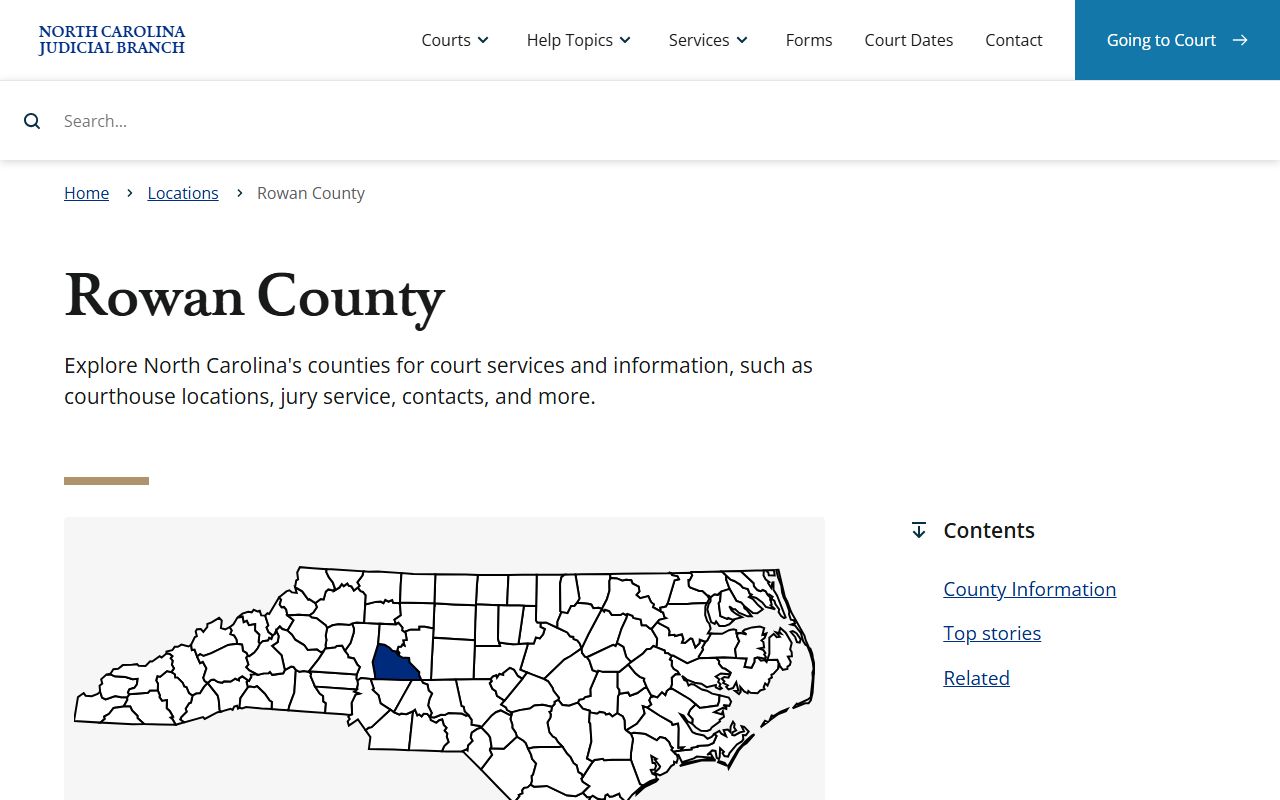
Use the court page with the eCourts portal or court-date search when the goal is the filed case, not just current custody.
- Start with the Rowan P2C roster only long enough to confirm the name, arrest date, charge wording, and any docket or court date shown.
- Open the Judicial Branch court-date search or the eCourts Portal.
- Search by defendant name, citation number, county, or case number when known.
- Compare the jail roster charge wording with the court case charge list.
- Contact the Rowan County Clerk of Superior Court for older files, copies, sealed-record questions, or access issues.
Rowan County Court Search Fields
Court-search fields vary by portal, but the research captured the main access points. The court-date tool is useful for hearings and calendars. The eCourts Portal is broader and may show case-search and payment options. Exact portal controls can change, so names, case numbers, citation numbers, and county filters are the safest starting points.
| Portal / Service | Field | Type | Notes |
|---|---|---|---|
| NC Court Dates | Name | Text | Search by defendant name when the case number is unknown |
| NC Court Dates | Citation Number | Text | Useful for traffic and citation-based criminal matters |
| NC Court Dates | County | Selector | Choose Rowan County to narrow the calendar search |
| NC eCourts Portal | Party or name search | Text | Use with Rowan County filters when available |
| NC eCourts Portal | Case number | Text | Best when a docket or case number is already known |
From Jail Arrest to Court Case
The path from arrest to court record is not instant. A person may be arrested by the Sheriff's Office or a municipal agency, taken to the Rowan County Detention Center, searched, identified, photographed and fingerprinted when required, screened, and entered into the jail system. The roster can display custody facts before the court case is fully reflected online. If the person stays in custody, a first appearance must occur within the timing set by North Carolina law.
North Carolina G.S. 15A-601 generally requires first appearance before a district court judge within 72 hours after custody or at the first regular district court session in the county, with a 96-hour rule when the courthouse is closed longer than 72 hours. A magistrate, clerk, judge, or other authorized judicial official can also affect early release conditions. This is why a court record after a jail arrest may show events that the roster does not show in the same form.
Charging Documents After Arrest
Charges can enter the court record through several criminal processes. The research uses complaint, information, indictment, arrest warrant, magistrate order, citation, and other process terms to describe how the arrest charge becomes a filed case. The key point is that the court record controls the case status. The jail roster can be a clue, but it is not the final charging authority.
| Document | Role in the Case | What to Check |
|---|---|---|
| Complaint or warrant process | Begins or supports the criminal accusation after an arrest | Name, charge, date, case number, and whether the warrant is returned or sealed |
| Information | Prosecutor-filed charging document in eligible matters | Charge wording, offense level, amendments, and disposition |
| Indictment | Grand jury charging document often used in felony cases | Whether it supersedes earlier charge wording or adds counts |
Rowan County Charge Status
A court record after an arrest may show several stages before final disposition. Pending means the case remains open. Dismissed means a charge is no longer being prosecuted in that case posture. Amended or reduced charges show that the wording, level, or count changed. Superseded by indictment means a later indictment replaced the earlier charging path. Probation, judgment, conviction, or disposition language belongs to the court record, not to the booking photo.
| Status | Plain Meaning |
|---|---|
| Pending | The charge remains open and still needs a court outcome. |
| Amended or reduced | The filed charge changed from the original wording or level. |
| Dismissed | The charge was ended in that case, though other charges may remain. |
| Superseded | A later indictment or filing replaced the earlier process. |
| Judgment or conviction | The case reached a plea, verdict, or other final court action. |
Bond Records After Arrest
Bond is a court function, not just a jail decision. North Carolina G.S. 15A-534 governs pretrial-release conditions, and the research notes 2025 amendments effective December 1, 2025, so stale bond explanations should be avoided. For Rowan County users, the practical point is that the jail can process release after lawful conditions are met, but the release condition comes from an authorized judicial official.
| Release Type | Meaning |
|---|---|
| Written promise or unsecured release | The defendant promises to appear without posting secured money up front. |
| Custody release | The defendant may be released to a responsible person when ordered. |
| Secured or cash bond | Money, property, or other security must be posted before release. |
| Surety bond | A licensed bondsman posts surety under a fee or contract. |
| No-bond hold | A separate hold, warrant, supervision matter, federal issue, or court order prevents ordinary release. |
Rowan P2C settings hide bond amount in the public roster. If bond type or status is unclear, contact the detention center, magistrates at 704-797-3130, or the clerk at 704-797-3001 for current court instructions.
Warrants and Court Records
No confirmed official Rowan County sheriff active-warrant search was located in the research. P2C may show a person after a warrant arrest leads to booking, and returned arrest or search warrants can become public court records under North Carolina law when they are not sealed. Magistrates, the Clerk of Superior Court, the Sheriff's Office, and the detention center are the safer official channels for warrant questions after an arrest.
- Arrest warrant
- A process directing law enforcement to arrest a person on a criminal charge.
- Order for arrest
- A court order that may follow missed court, a violation, or another court event.
- Search warrant
- A warrant authorizing a search, not the same as an arrest warrant.
- Detainer
- A hold or request from another agency that can block release.
Charges vs Convictions
An arrest charge is an accusation. A conviction is a court outcome after a plea, verdict, or other judgment. Rowan County court records after arrest should be read with that sequence in mind, especially when P2C recent-arrest results include a non-conviction disclaimer. Do not treat a booking entry, mugshot, or charge list as proof that the person was found guilty.
| Point | Charge | Conviction |
|---|---|---|
| Stage | Accusation or filed count | Final court result after plea, verdict, or judgment |
| Source | Roster, warrant, citation, information, or indictment | Court judgment or disposition record |
| Can it change? | Yes, it may be amended, reduced, dismissed, or superseded | Changes require post-judgment or appellate action, expunction, or correction |
Sealed and Expunged Records
North Carolina public-record law does not make every criminal file open in the same way. G.S. 132-1.4 treats criminal-investigation and criminal-intelligence records differently from ordinary public records. G.S. 132-1.4A treats law-enforcement recordings separately and Rowan County's own form points body-camera requests to a court-petition process. Expunction is another process. Research identifies G.S. 15A-145.5 and G.S. 15A-153 as statutes tied to clearing eligible public record entries after a court order.
| Record Treatment | Public Effect | Rowan County Path |
|---|---|---|
| Sealed or restricted | Public access is limited by law or court order | Ask the clerk about case-file access and sealed-record limits |
| Expunged | Eligible public entries can be cleared under a court order | Use court process, then provide orders to agencies if a stale record remains online |
| Dismissed but not expunged | A dismissal may still appear in some court or booking contexts | Check the court disposition and eligibility before assuming removal |
Rowan County Court Contacts
For filed court records after a jail arrest, start with the Clerk of Superior Court or online court tools. The District Attorney handles prosecution and victim or witness matters for the State, but the DA is not a defense-advice or general records office. For custody confirmation, use the jail. For the public case file, use the clerk.
Clerk of Superior Court
Rowan County Courthouse
Salisbury, NC
704-797-3001
District Attorney
232 N Main Street
Salisbury, NC 28144
704-797-3010
Magistrates
Rowan County
Salisbury, NC
704-797-3130
Important: A public lookup is not a consumer report and cannot be used for FCRA-covered screening decisions.